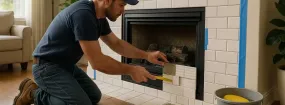
Some households light a fire every evening all winter; others use theirs a handful of times a year. Both need attention, just on a different schedule. Whatever your routine, if you have been looking up “repairing cracked fireplace tiles”, this page explains fireplace tile repair in a way that fits real homes around Edmonton, from what wears out first to how often a technician should take a look at your fireplace.
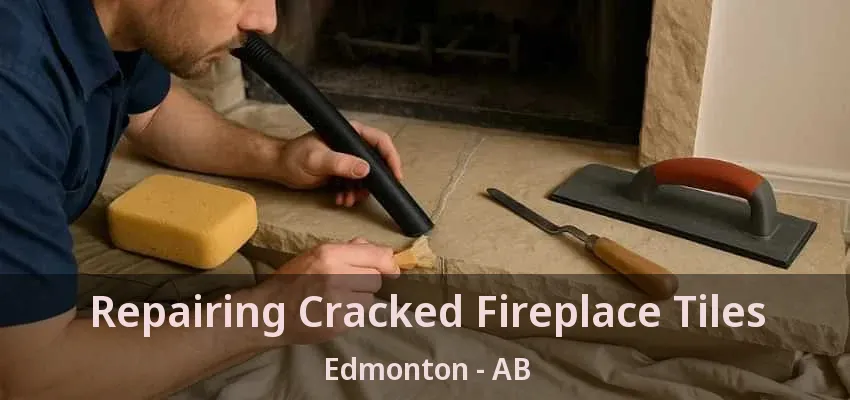
Repairing is usually worth it, because the costly parts of a wood-burning setup, such as the chimney and the masonry around a fireplace, are built to last a very long time. Worn mortar, a rusted damper, cracked firebrick and tired door gaskets are all fixable. Replacement starts to make sense when the main body is failing: a stove with a cracked or badly warped body, a factory-built fireplace whose metal box has rusted through, or masonry so damaged that rebuilding approaches the cost of starting over. A technician can lay out both paths with their pros and cons so you can compare them calmly.
Creosote is the dark residue that forms when wood smoke cools and condenses inside a chimney or stovepipe, and it matters because it burns. It starts as dry, flaky soot, can thicken into a crunchy or sticky tar and at its worst becomes a hard, shiny glaze. A thick layer can ignite and cause a chimney fire. Creosote builds faster when wood is damp, when fires smolder with too little air and when the flue stays cold, as it often does in a chimney on an outside wall. Burning dry wood with a lively flame and having the flue swept when buildup appears keeps it under control.
It depends on where the tiles are and what lies beneath them. A cracked decorative tile high on the surround, away from the opening, is usually cosmetic. Cracks in the hearth directly in front of the opening, or on tiles that line or frame the firebox, matter more, since those surfaces protect the floor and framing from heat and embers. Several cracks in a row can also signal a settling hearth or failing base. A technician looking at your “repairing cracked fireplace tiles” job should explain which category your tiles fall into before recommending the repair.
The signs fall into two groups: what you hear during the fire and what we find after it. A fast chimney fire is often described as sounding like a freight train or a jet engine, with popping as tiles and deposits heat up. In that moment, the only job is to leave the house and call the fire department. Afterward, we look for creosote that has swelled into a honeycomb texture, discolored or distorted metal, cracked liner sections and stains where smoke escaped through gaps. Those clues matter because a quiet chimney fire can damage a flue without anyone noticing.
The list of usual repairs is short and fairly predictable, and each item has a standard fix. Inside the firebox, we replace firebrick that has cracked or spalled and repoint joints where mortar has burned away, always with heat-rated refractory materials. At the throat, we free up or replace dampers that have rusted shut or no longer seal. Up top, we refit missing caps and patch cracked crowns before water does more damage. We also see loose hearth tiles, sagging glass door frames and smoke chamber walls too rough to clean properly. Each repair is small on its own; trouble comes from letting several pile up.
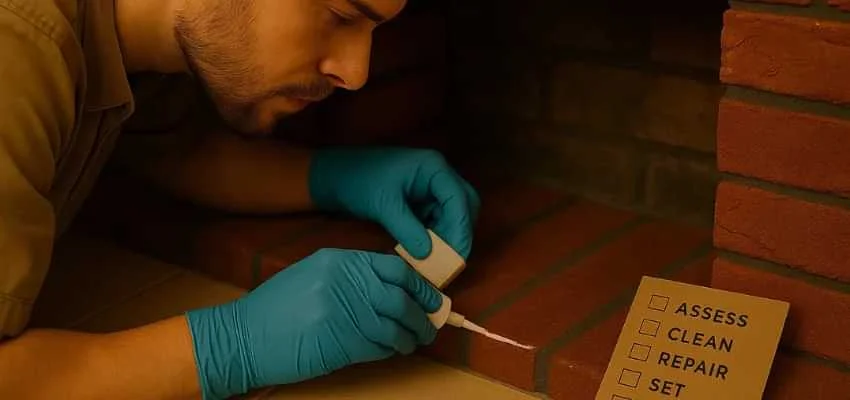
A sweep cleans the whole smoke path, and we work from the fire upward and from the room outward. First the hearth and nearby floor are covered, then a high-suction vacuum goes on, keeping the room under slight negative pressure so soot is drawn toward our equipment instead of drifting out. Brushing comes after that: rotary or wire brushes sized to the flue, pushed through in sections until the walls are clear. The smoke shelf behind the damper is where loose debris piles up, so it gets cleaned by hand. We finish by checking the damper seal, looking at the cap and showing the homeowner photos of anything worth discussing.
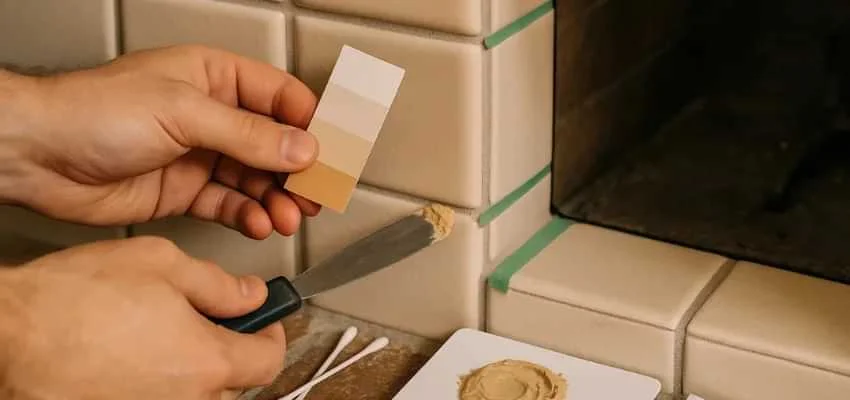
Start by checking the garage, basement or attic, since builders and previous owners often left spare tiles behind. If none turn up, a tile supplier may be able to match the size, color and finish from a sample, especially for common styles. Salvage yards and specialty makers can help with older or handmade tiles. When an exact match is impossible, some homeowners place a contrasting tile in a deliberate pattern, or retile the hearth or surround entirely. If you are researching “repairing cracked fireplace tiles”, keep one broken piece to take shopping.
Fireplace repairs range from a single visit to several days, and the hands-on time is often shorter than the waiting around it. Replacing a damper or a few firebricks fits into one appointment. A full firebox rebuild or crown repair may take a day or more of work, and roof jobs depend on calm, dry weather. Then comes cure time, since refractory mortar and crown materials need to set properly before they face heat or rain. We give homeowners a realistic window for the whole project, including the wait before the first small fire, so nobody plans a cozy evening too early.
Ashes are cleaned out safely by waiting until they are cold, scooping them into a lidded metal bucket and taking that bucket straight outside. Cold ash only, every time; any warmth deep in the pile means it waits. Once outside, the bucket belongs on bare ground or concrete, where a surviving ember can do no harm. We have seen ash buckets left on wooden decks and in garages, which is exactly where they should not be. Daily stove users may empty the pan every day or two, and ash vacuums made for the job are an option once everything is fully cold.
A proper look at your fireplace means one less worry for everyone under your roof. We explain what we checked and what we recommend, step by step, in plain words. Call (587) 206-3388 to book fireplace tile repair in Edmonton.
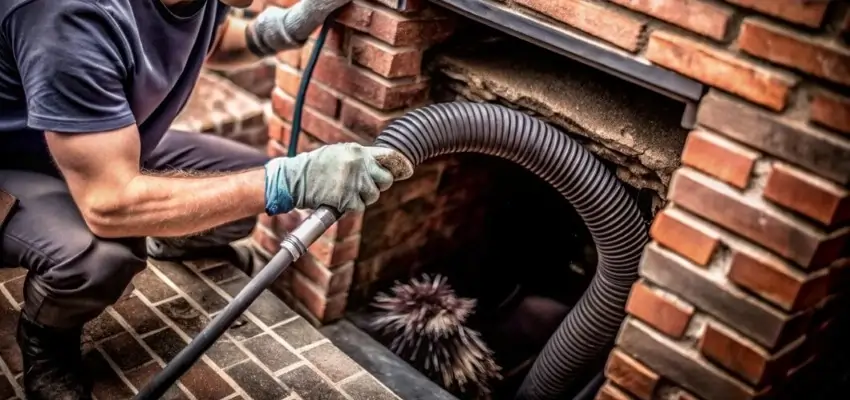
Less smoky smell, steadier flames: Chimney Cleaning around Edmonton
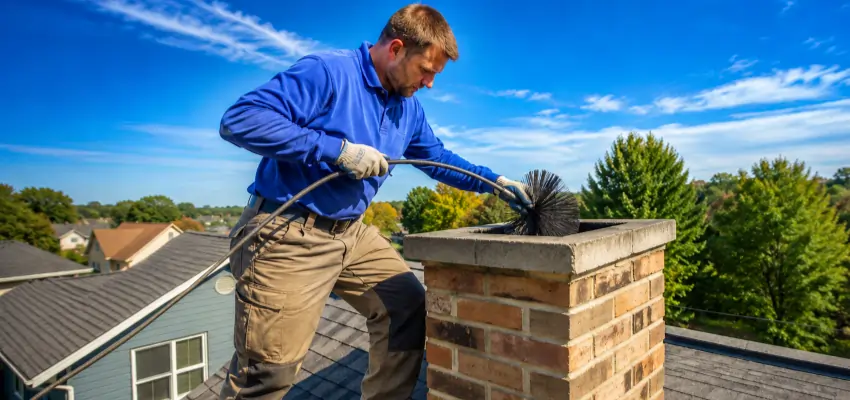
Creosote cleared, flue inspected: Chimney Sweep for Edmonton
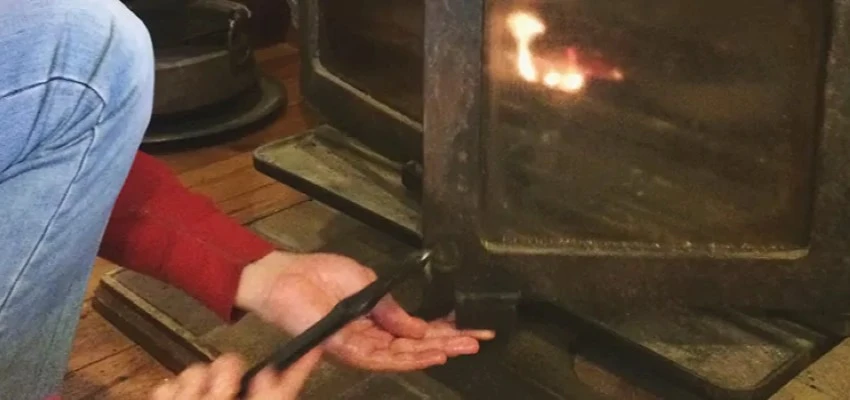
What's included in Chimney Sweep Services around Edmonton?
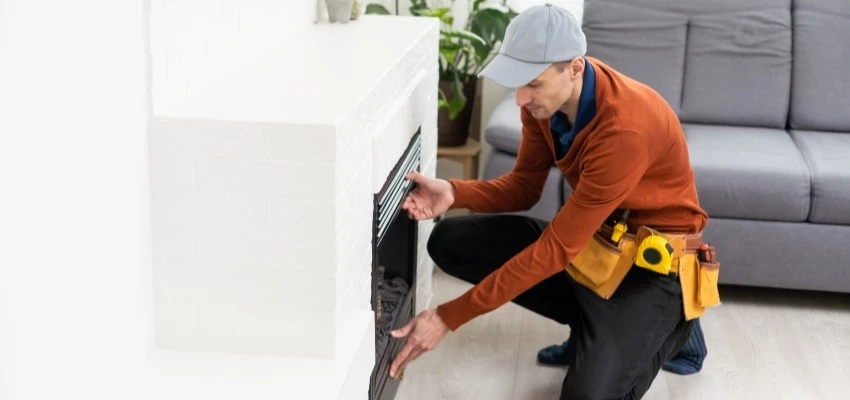
Before relighting in Edmonton, a visit from Fireplace Experts
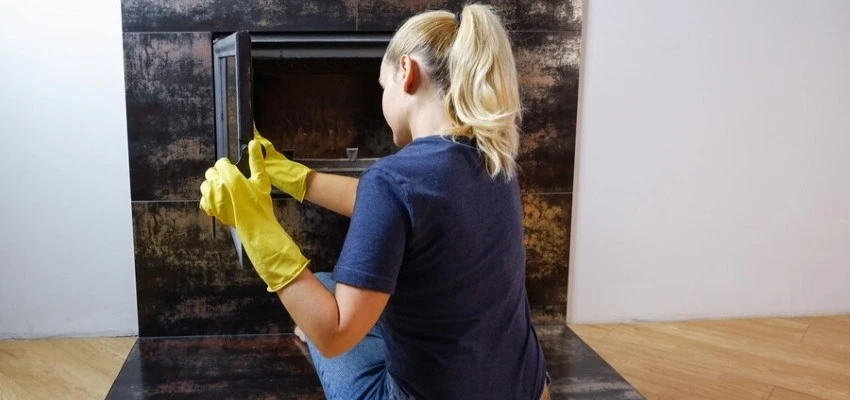
Gas Fireplace Cleaning, glass to burner ports
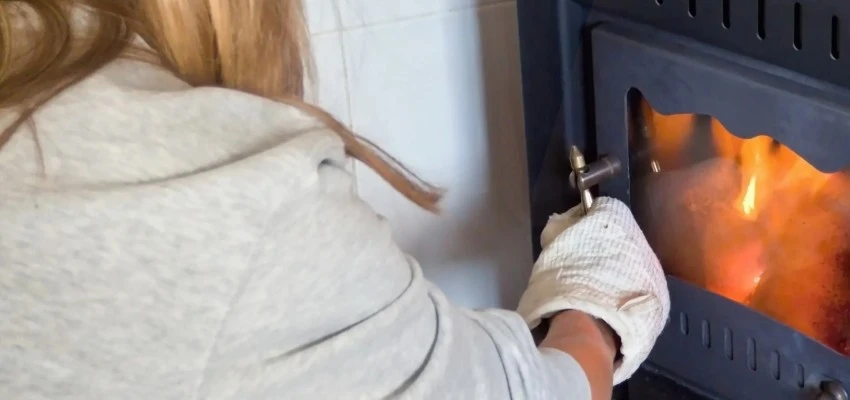
Burner ports, pilot hood, glass: Gas Fireplace Maintenance around Edmonton