How long will it take? Can it be done without tearing everything out? When can we light a fire again? These questions come up in almost every conversation we have about fireplace work. For homeowners in Edmonton who searched for “fireplace restoration”, we have gathered the answers in one place, with practical notes on hearth and firebox restoration drawn from jobs in homes much like yours.
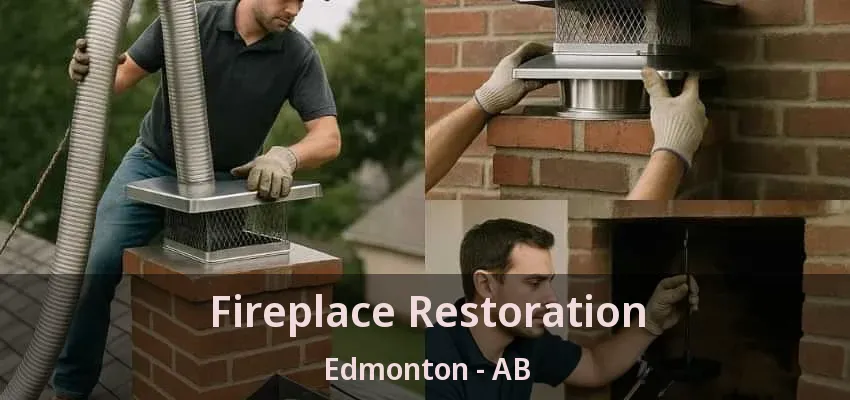
In an older home, fireplace restoration means bringing the original fireplace back to safe working order while keeping the features that give it character. That can involve rebuilding a worn firebox, repairing the damper and smoke chamber, lifting long-built-up soot from brick, resetting original tiles and refinishing cast iron or wood. The aim is authenticity as well as safety, so materials are matched as closely as possible. If you searched for “fireplace restoration” because the fireplace came with the house and its history is a mystery, an inspection will show what can be saved and what must be rebuilt.
We lean toward restoration whenever the bones are good. Original fireplaces in older homes were often built with care, and their brickwork, tile insets or cast iron fronts are hard to reproduce. Restoring them means rebuilding what has failed out of sight, like eroded firebrick and a deteriorated smoke chamber, and conserving what makes the fireplace distinctive. Replacement enters the conversation when the firebox has shifted or cracked through, when earlier repairs used the wrong materials throughout or when the layout simply cannot be made safe. Either way, you should see the evidence before deciding.
Heat cycling does most of the damage, with help from moisture and knocks. Every fire expands the face of the brick faster than its back, and over many seasons that stress opens cracks. Water from a missing cap or a damaged crown soaks into the brick and freezes or turns to steam, which flakes the surface away. Grates jammed against the back wall and heavy logs tossed in chip the edges. When we inspect, we tap and probe: a cracked brick that is still tight gets noted, while one that moves, or a joint we can rake out with a finger, gets repaired.
Fireplace doors and screens need repair when glass is cracked, doors no longer close or latch, hinges sag, mesh screens tear or the frame has pulled away from the opening. Cracked glass should be replaced before the next fire with glass made for fireplace use, not ordinary window glass. Gaps around the frame let warm room air escape when the fireplace is off. Warping usually comes from very hot fires with the doors closed. Most frames, hinges, handles and mesh panels can be repaired or replaced without changing the whole set.
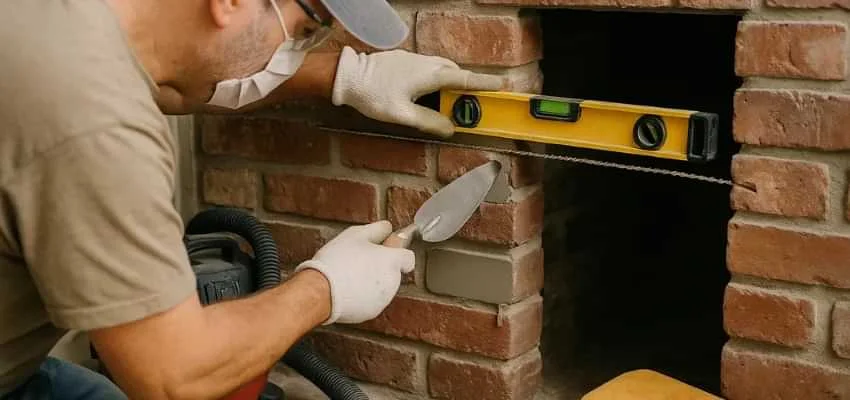
Most firebox damage is repaired by repointing worn joints and replacing cracked bricks, without rebuilding the whole firebox. Old, loose mortar is raked out and replaced with refractory mortar made for direct heat, since ordinary mortar breaks down quickly in a firebox. Bricks that are cracked through or crumbling are cut out and replaced with matching firebrick. When large areas are failing, or the back wall has bulged, a section or the full firebox lining is rebuilt. Afterward, the repairs need time to cure, and the first fires should be kept small.
Often it can, because cast iron rusts on the surface long before it fails. Period fronts, decorative inserts and summer covers are usually taken apart, stripped of old paint and rust, and finished with a graphite polish or a heat-tolerant coating that suits the original look. Hairline cracks in a front that sits away from direct flame can sometimes be repaired by a specialist, while a section that has split through, or a missing piece, may be replaced with a casting made to match. The firebox and damper behind the front still need checking, since a handsome front does not make an unsafe opening usable. Ask about both when planning hearth and firebox restoration.
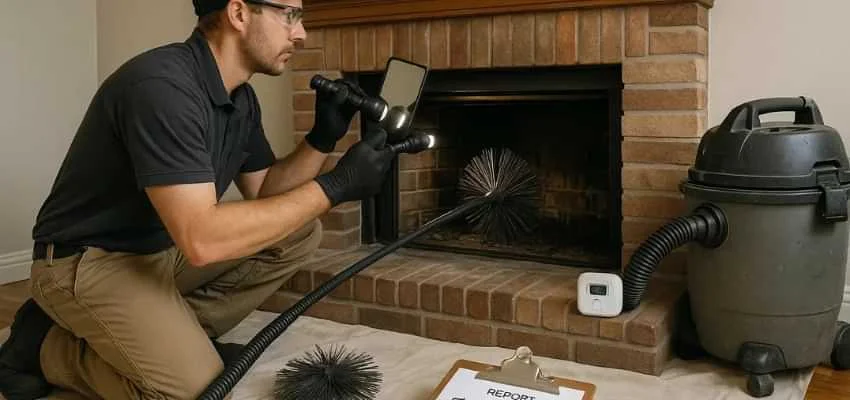
Our restorations follow the fire’s path, starting where the heat is and ending where people look. First the firebox: loose or eroded bricks come out, joints are repointed with refractory mortar and any shifted sections are rebuilt. Then the throat and damper, then the smoke chamber above. Only after the working parts are sound do we turn to the face, lifting soot from brick with care, replacing cracked tiles with close matches and treating rust on cast iron. We photograph each stage, so you can see the hidden work as well as the visible result.
The cost depends mostly on the scope of work, the materials and what turns up once old surfaces come off. A simple refresh with paint or a new mantel shelf costs far less than full stone refacing, a gas conversion or rebuilding a firebox. Material choice matters too: natural stone, custom millwork and specialty tile cost more than standard options. Access, the size of the fireplace and any hidden damage add time, while gas work, liners and venting add parts. A clear, itemized quote that separates repairs from finishes makes options much easier to compare.
Rust on fireplace metal comes from moisture, so the main defense is keeping water out. A chimney cap stops rain from falling straight onto the damper and firebox, and a closed damper limits humid air in summer, unless gas logs require it open. Remove ashes after the season, since damp ash holds moisture against metal. Light surface rust on doors, frames or grates can be cleaned and touched up with high-temperature paint made for fireplaces. Heavy rust, flaking or holes in a damper or metal firebox need professional attention. Checking metal parts once a year catches problems early.
Tell us the days and hours that suit you and we will look for an opening that matches. We confirm the arrival window ahead of time so you can plan your day in Edmonton. Request a time for hearth and firebox restoration.
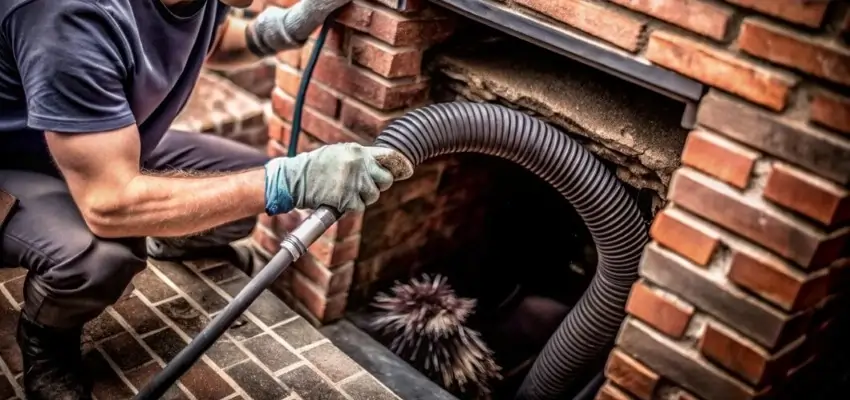
Less smoky smell, steadier flames: Chimney Cleaning around Edmonton
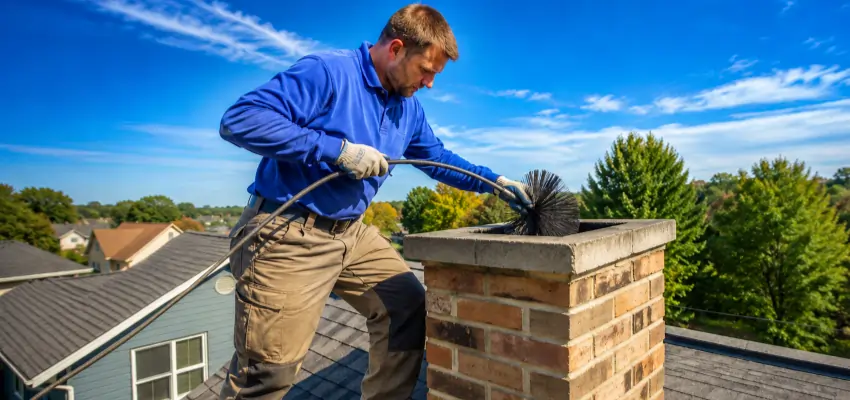
Creosote cleared, flue inspected: Chimney Sweep for Edmonton
What's included in Chimney Sweep Services around Edmonton?
Before relighting in Edmonton, a visit from Fireplace Experts
Gas Fireplace Cleaning, glass to burner ports
Burner ports, pilot hood, glass: Gas Fireplace Maintenance around Edmonton